31 Oct 2026
Charting Shifts in Specimen Acquisition Patterns Across Global Mineral Networks
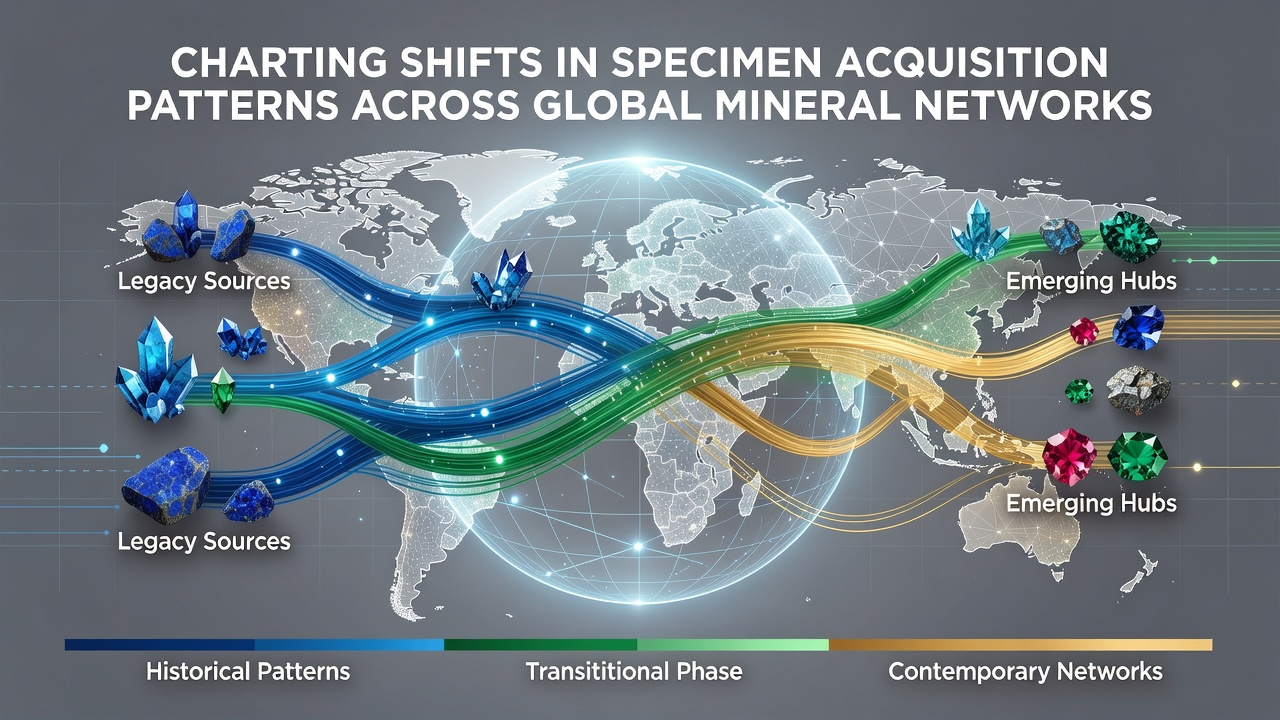
Global mineral networks have undergone measurable changes in how specimens move from source sites to end users, with data from 2024 through 2026 highlighting adjustments in extraction volumes, transport routes, and sourcing preferences. Researchers tracking these networks point to a combination of regulatory updates, technological integration, and shifting trade volumes that together alter traditional acquisition flows.
Historical Acquisition Baselines
Before 2020 most mineral specimens followed established paths from large-scale mines in Australia, South Africa, and Chile directly to processing centers in Asia and Europe, yet records maintained by the United States Geological Survey show that smaller specimen lots often traveled through secondary markets in Europe before reaching collectors and research institutions. These patterns relied on long-term contracts and bulk shipping methods that prioritized volume over traceability.
Recent Adjustments in Sourcing Volumes
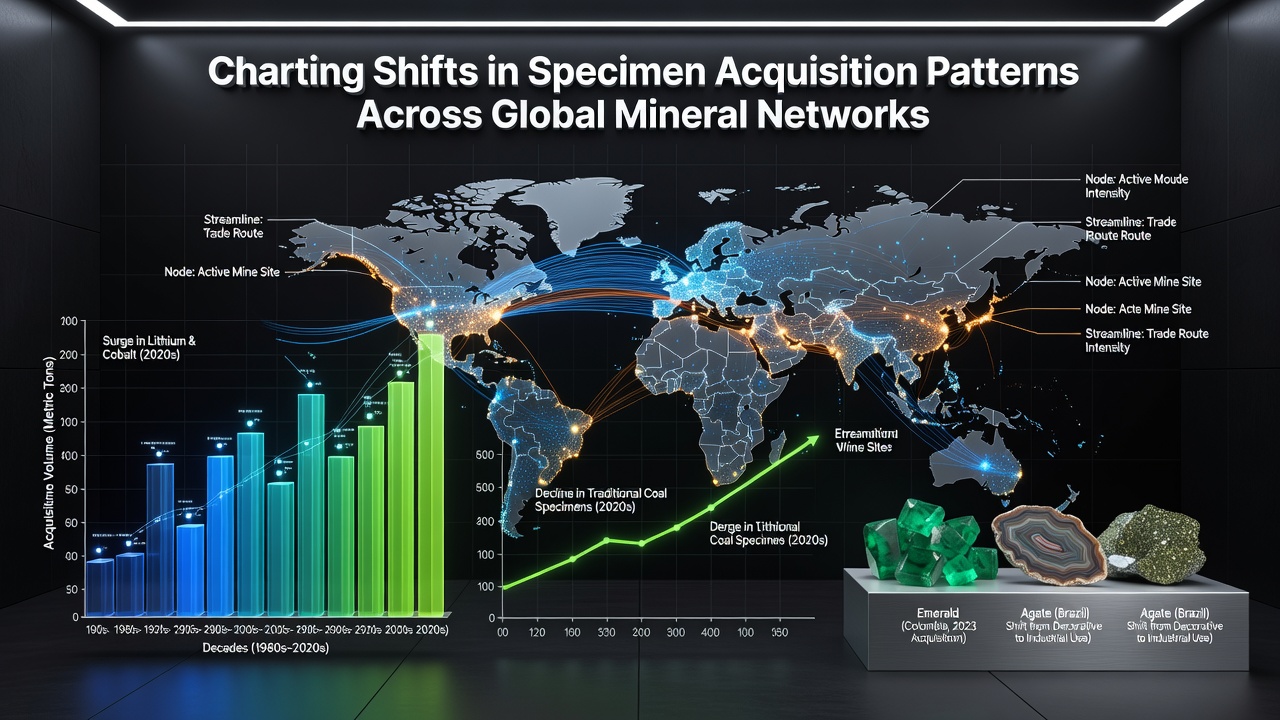
Data compiled through mid-2026 indicates a noticeable rise in direct acquisitions from smaller deposits in Canada and Brazil, while traditional bulk shipments from certain African regions have declined by measurable percentages. Observers note that lithium and rare-earth specimens now reach laboratories and manufacturers through shorter intermediary chains, reducing the number of handoffs between extraction and final delivery. In October 2026 several international trade databases recorded updated export figures that reflect these rerouted movements.
Technology and Traceability Integration
Digital tagging systems and blockchain platforms have entered acquisition workflows at multiple points, allowing each specimen to carry documented origin details from the moment it leaves the ground. Mining operations in Western Australia and Quebec adopted these tools earlier than most, and subsequent studies show higher compliance rates with end-user documentation requirements. The result appears in transaction records where buyers can verify chain-of-custody details without relying on paper certificates that once accompanied shipments.
Regulatory Influences on Movement
Policy changes in the European Union and Canada have introduced stricter documentation standards for critical minerals, prompting suppliers to adjust acquisition strategies well before October 2026 deadlines. These rules emphasize verified environmental practices and labor conditions, which in turn affect which sites continue to supply specimens to international markets. Australian government reports released in 2025 already documented corresponding increases in direct sales from certified operations that meet the new criteria.
Regional Variations in Collection Practices
North American networks show steady growth in specimen recovery from byproduct streams at existing copper and nickel sites, whereas South American operations have expanded dedicated extraction for lithium-bearing materials. African networks continue to supply substantial volumes yet route more material through regional hubs before export, a shift documented in trade statistics from the African Minerals Development Centre. Asian markets, meanwhile, maintain high demand for finished specimens while increasing domestic sourcing from newly permitted deposits in Southeast Asia.
Supply Chain Adaptations Observed in 2026
Logistics companies handling mineral specimens report greater use of consolidated air and sea shipments that combine multiple small lots, reducing per-unit transport costs and time. This adaptation aligns with data showing more frequent but smaller acquisition orders placed by research institutions and specialty manufacturers. Industry organizations tracking these movements note that such consolidation also supports compliance with updated customs procedures now in force across several jurisdictions.
Conclusion
Acquisition patterns across global mineral networks continue to evolve under the combined pressure of regulatory requirements, technological capabilities, and changing production geographies. Records maintained by government agencies and trade monitoring bodies provide consistent evidence of these shifts through 2026, offering clear indicators of how specimens reach their destinations. Continued monitoring of export volumes, documentation standards, and transport methods will reveal further adjustments as networks respond to new conditions.